A New StoryMap Reveals the Cost
What happens when a community loses the water that sustains it?
Explore a first-of-its-kind interactive website that examines the lasting consequences of agricultural water exports on the Lower Arkansas Valley's farmland, economy, and communities.
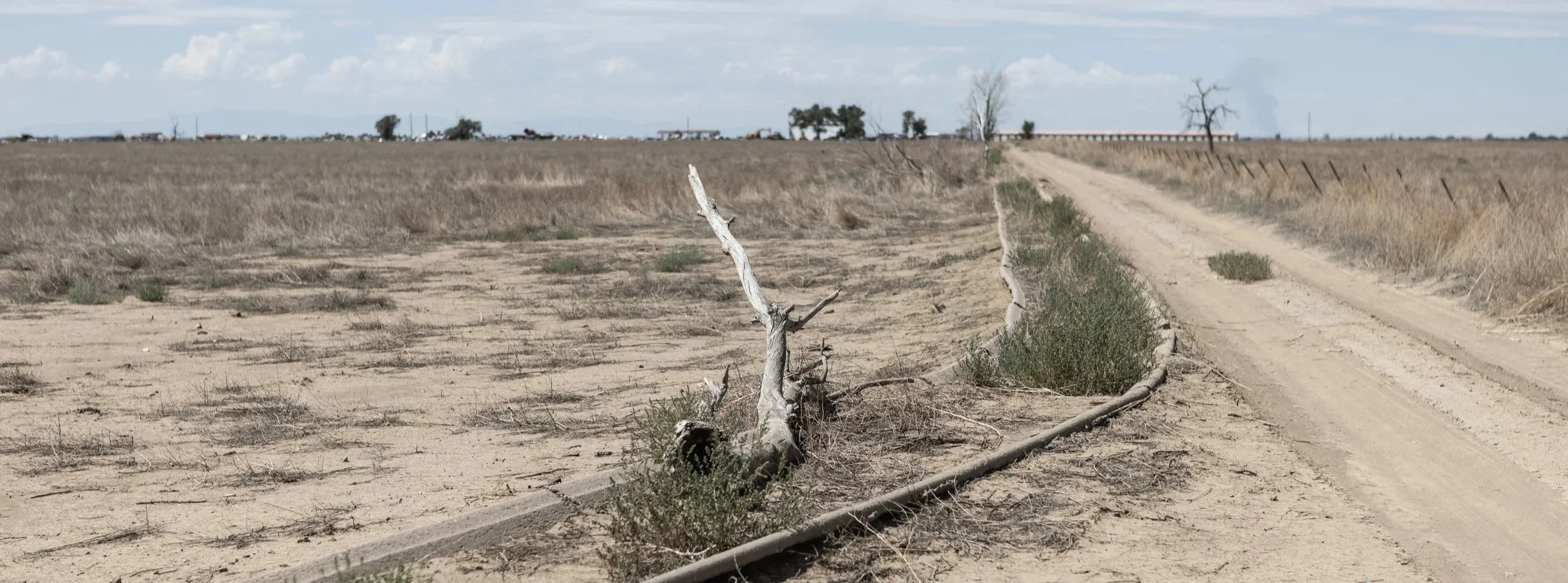
The new StoryMap traces the history of the Lower Arkansas Valley, exploring how communities took root and prospered as irrigation canals brought Arkansas River water to farmland. Through historical documentation, visual storytelling, and economic analysis, it then shows how decades of water exports to Front Range cities, including Colorado Springs and Aurora, have fundamentally changed the Valley and continue to affect its agricultural economy and communities today.
More than 100,000 acres of historically irrigated farmland have been dried up across the five-county Lower Arkansas Valley. This includes over 40,000 acres permanently dried up due to water exports to cities on the Front Range. Economic modeling commissioned by the Lower Ark District estimates that the overall loss of irrigated agriculture has reduced the region's economic output by approximately $142 million every year, including $52 million annually in Crowley County alone.
The StoryMap also identifies approximately 40,000 additional irrigated acres at high risk of permanent dry-up. If those lands are dried up, the lost economic output in the Lower Arkansas Valley could increase to $184 million each year.
A changing agricultural landscape
The loss of irrigated farmland is visible across the Lower Arkansas Valley. This animation illustrates the decline in irrigated acreage over time, showing how the region’s agricultural landscape has changed.
See the film
A new five-minute film brings the story of buy-and-dry in Colorado’s Lower Arkansas Valley to life through the voices of local farmers, business owners, and residents. Hear firsthand how the loss of irrigation water affects more than farmland, impacting local businesses, families, and entire communities. Discover what’s at stake and why protecting the Valley’s agricultural future matters for generations to come.
Why this matters
When irrigation water is permanently exported from the Lower Arkansas Valley to far-away cities, Colorado isn't simply moving water. It's also moving economic opportunity away from the communities that have long depended on it.
The Lower Ark District believes that one community should not be sacrificed for the growth of another and that Colorado should not grow its cities by shrinking the agricultural communities that feed them.
The findings in the StoryMap are intended to inform elected officials, policymakers, and the public as Colorado considers the long-term implications of agricultural-to-municipal water exports. The Lower Ark District calls for new policies, programs, and trusted partnerships that will make it economically viable for farmers to continue farming and keep their water in the Valley.
We invite you to explore the findings, share the StoryMap and consider what they mean for the future of the Lower Arkansas Valley and Colorado.
The future of the Lower Arkansas Valley will not be determined by chance.
It will be determined by the choices we make.
For more information on the economic findings or the StoryMap, please contact the Lower Ark District at info@lowerark.com.