
When Water Leaves the Land, Responsibility Shouldn’t | HB26-1340
More than 100,000 acres of irrigated farmland in the Arkansas River Basin have been permanently dried up, often to supply municipal water demands hundreds of miles away. Too often, that land is left in poor condition, forcing neighboring landowners and rural communities to deal with the consequences: blowing dust, invasive weeds, soil erosion, increased fire risk, and real public safety concerns.
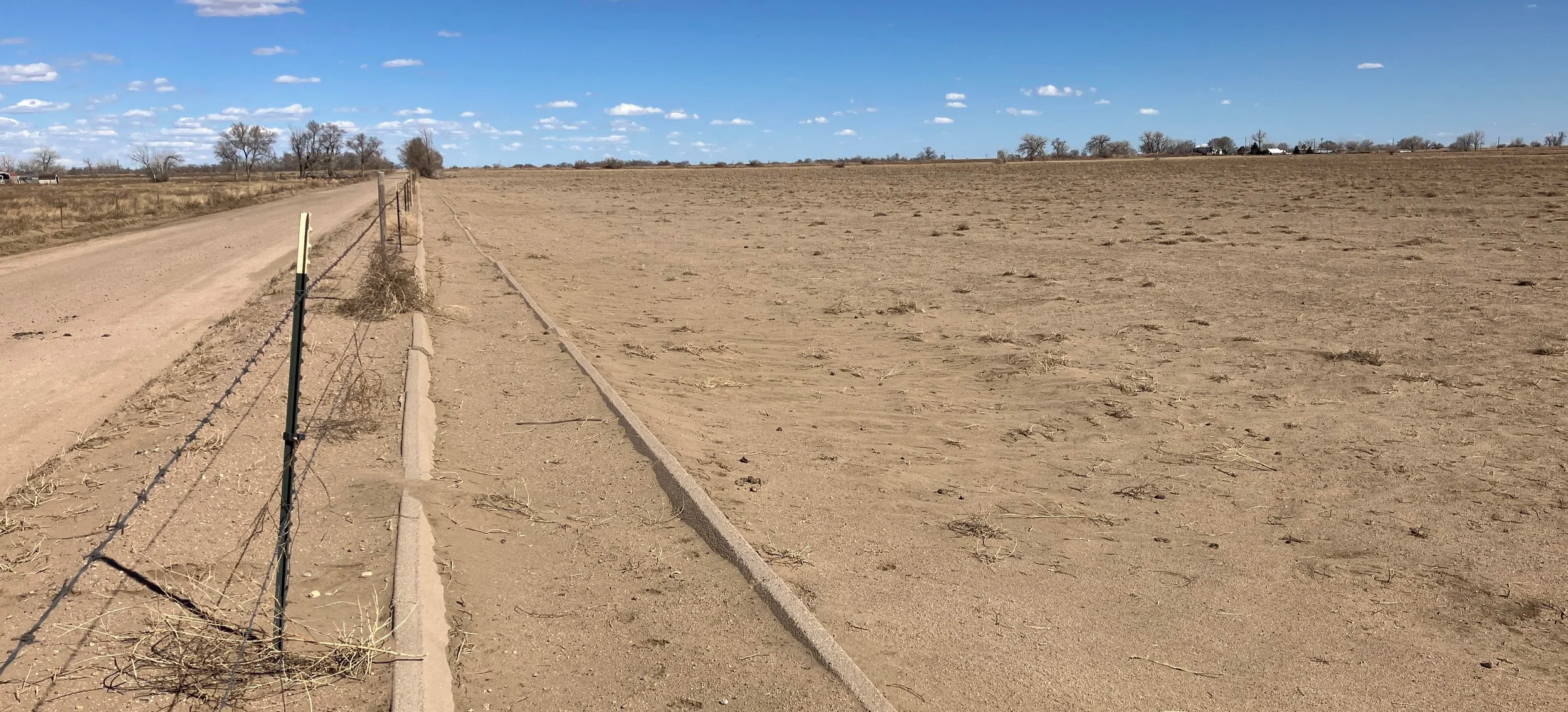
A common sight in Crowley County, this 2025 photo shows a formerly irrigated field dried up over three decades ago and poorly reclaimed. The concrete irrigation ditch is now filled with windblown sand.
Colorado law, adopted in 1992, requires revegetation to be considered when water is permanently removed from farmland for other uses, but it stops short of ensuring the work is actually completed.
On March 25, 2026, HB26-1340 was introduced in the Colorado General Assembly by Representative Ty Winter, Representative Tisha Mauro, Senator Rod Pelton, and Senator Nick Hinrichsen, with the Lower Arkansas Valley Water Conservancy District serving as the bill’s proponent. The bill reflects a bipartisan commitment to addressing one of the most visible and long-lasting impacts of permanently dried-up farmland.
HB26-1340 establishes clear, consistent expectations for what happens after water leaves the land. It requires the new water right owner, who is removing the water from the land for other uses, to ensure that the permanently dried-up farmland is either revegetated or converted to dryland farming, unless the land will be developed or re-irrigated with another water source. When other natural resources are extracted from the land, including gravel, oil and gas, or precious metals, the entity removing and benefiting from the resource is required to reclaim the land. Extracting water from farmland should be no different. The bill also incorporates county revegetation criteria if available, and introduces independent third-party oversight through annual field reviews. It provides flexible compliance pathways, including phased water use tied to reclamation progress or the option to post a performance bond.
This is about responsibility. When water is permanently removed from farmland, the impacts do not disappear. They remain on the ground, affecting the neighbors, counties, and entire rural communities, and should not be left for others to manage.
HB26-1340 is a practical step toward ensuring that when water leaves the land, responsibility does not leave with it.
