
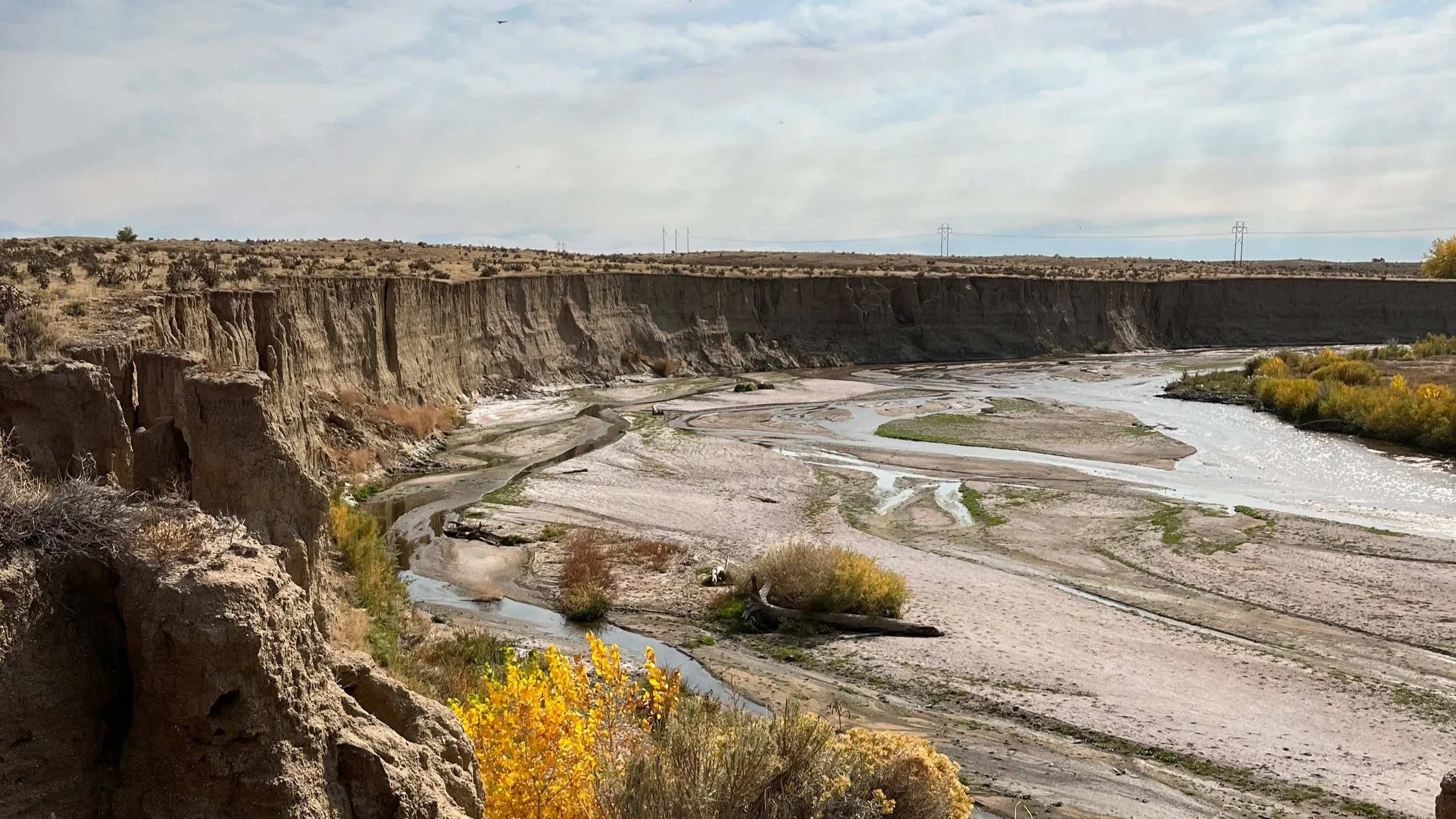
The Lower Arkansas Valley Water Conservancy District heard a presentation from the Fountain Creek Watershed District (FCWD) during its February 2026 board meeting to discuss ongoing projects and funding challenges related to improvements along Fountain Creek. The FCWD was created after years of disputes between Colorado Springs and downstream communities over stormwater runoff, erosion, sedimentation, and water quality impacts tied to rapid growth in Colorado Springs and El Paso County. The district’s mission is to address erosion, sedimentation, and flood control issues throughout the Fountain Creek watershed while helping protect downstream communities.
During the presentation, FCWD highlighted the Barr Farm Project, a multi-benefit effort focused on stabilizing streambanks, reducing sediment erosion, and restoring riparian habitat in a highly erodible reach of Fountain Creek. The Lower Ark District provided financial support to help cover maintenance costs for this work, recognizing the direct connection between conditions on Fountain Creek and the health of the Arkansas River within and below Pueblo.
FCWD also shared that most funding for its projects has come from the $50 million settlement paid by Colorado Springs to Pueblo County as mitigation for impacts associated with the Southern Delivery System pipeline, which delivers water from Pueblo Reservoir to Pueblo West and many communities in El Paso County. Less than $9 million remains from that original funding, which is far short of what is needed. The estimated scope of work throughout the Fountain Creek watershed approaches $1 billion.
Directors of the Lower Ark District Board encouraged the FCWD to continue exploring additional revenue sources, including pursuing voter approval of a mill levy. The Board reiterated its commitment to partner on regional solutions and pledged its support for efforts that would strengthen the FCWD’s ability to deliver meaningful, watershed-wide improvements.
